
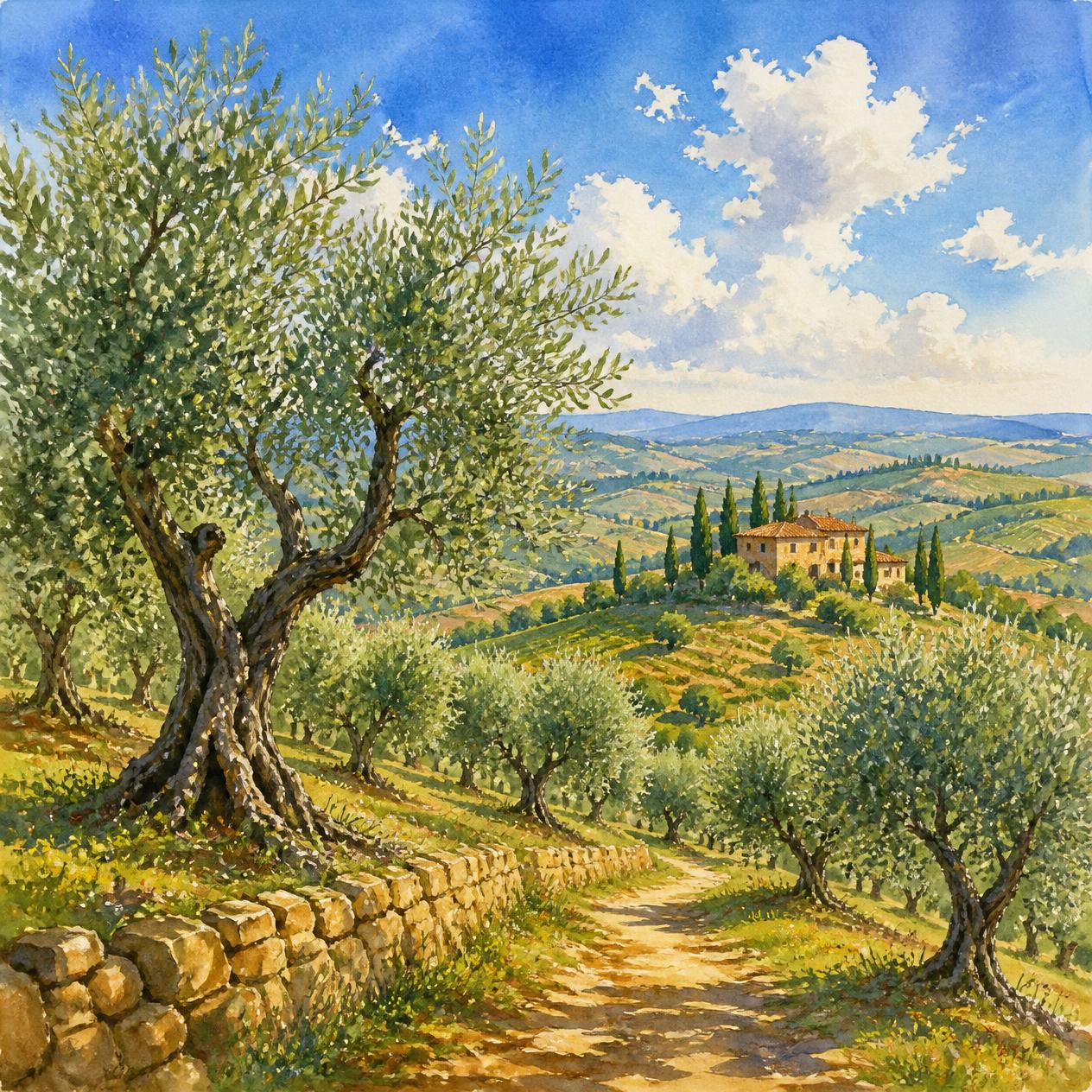
Tuscany, renowned for its rolling hills and stunning landscapes, is also celebrated worldwide for its exceptional olive oils. Central to this reputation are the diverse Tuscan olive cultivars, each bringing unique characteristics, aromas, and properties that contribute to the rich tapestry of flavours found in Tuscan olive oils. In this blog, we delve into the most prominent Tuscan olive cultivars, exploring their differences and what makes each one special.
Frantoio
Characteristics: Frantoio is one of the most widely planted olive cultivars in Tuscany and is often considered the benchmark for quality olive oil production. The trees are medium-sized with a high yield and good resistance to cold.
Aromas: Frantoio oils are known for their fruity, herbaceous aromas, often evoking fresh-cut grass, artichoke, and sometimes a subtle almond note.
Properties: Oils from Frantoio olives typically have a balanced bitterness and pungency, making them versatile for both raw and cooked applications. They are rich in polyphenols, contributing to their antioxidant properties and longer shelf life.
Leccino
Characteristics: Leccino is another predominant cultivar in Tuscany, recognized for its adaptability and resilience. The trees are hardy and can thrive in various soil types and climates.
Aromas: Leccino olive oils present a milder aroma compared to Frantoio, with delicate fruity notes reminiscent of green apple and almond.
Properties: The oil is less bitter and pungent, offering a smooth and sweet taste profile. It is often blended with more robust cultivars to balance intensity and create harmonious flavors.
Moraiolo
Characteristics: Moraiolo trees are vigorous and tend to produce smaller olives, which are highly prized for their oil content and quality. However, Moraiolo has a lower yield compared to other cultivars, making it less common in large-scale commercial production and more favored in artisanal or boutique oil production.
Aromas: Moraiolo oils boast intense, complex aromas with hints of tomato leaf, freshly cut grass, and pepper.
Properties: Known for their strong bitterness and pungency, Moraiolo oils are rich in phenolic compounds, lending powerful antioxidant benefits. They add depth and complexity when blended with Frantoio and Leccino.
Pendolino
Characteristics: Pendolino is often used as a pollinator cultivar due to its abundant flowering and early blooming period. The trees produce small, elongated olives.
Aromas: Oils from Pendolino tend to have subtle fruity and floral notes with a light, fresh aroma.
Properties: Pendolino oils are generally mild in flavor with low bitterness and pungency, making them suitable for those who prefer a gentler olive oil experience.
Maurino
Characteristics: Maurino is a less common cultivar found in certain parts of Tuscany, valued for its hardiness and resistance to pests. It produces medium-sized olives with a moderate yield.
Aromas: Maurino olive oils present a fruity aroma with hints of herbs and ripe fruit.
Properties: The oil has a balanced flavor profile with moderate bitterness and pungency, often used to enhance blends and add complexity.
Tuscan Cultivars: Key Differences
| Cultivar | Tree Characteristics | Aromas | Flavor Profile | Common Uses |
|---|---|---|---|---|
| Frantoio | Medium-sized, high yield, cold-resistant | Fruity, herbaceous, fresh-cut grass, artichoke, almond | Balanced bitterness and pungency, rich in polyphenols | Versatile for raw and cooked dishes |
| Leccino | Hardy, adaptable to various soils and climates | Mild fruity, green apple, almond | Smooth, sweet, less bitter and pungent | Often blended to balance intensity |
| Moraiolo | Vigorous, smaller olives, lower yield | Intense, complex, tomato leaf, freshly cut grass, pepper | Strong bitterness and pungency, high phenolics | Adds depth in artisanal blends |
| Pendolino | Abundant flowering, early bloom, small elongated olives | Subtle fruity and floral, light and fresh | Mild flavor, low bitterness and pungency | Suitable for mild olive oil preferences |
| Maurino | Hardy, pest-resistant, medium-sized olives | Fruity with hints of herbs and ripe fruit | Balanced flavor, moderate bitterness and pungency | Enhances blends, adds complexity |
Pollination in Tuscan Olive Groves
Pollination plays a crucial role in olive cultivation, with certain cultivars like Pendolino commonly planted to support the fertilization of other varieties. Cross-pollination between cultivars such as Frantoio, Leccino, and Moraiolo enhances fruit set and overall yield, improving both quantity and quality of the harvest.
Commercial vs Artisanal Production
Tuscan olive oil production ranges from large-scale commercial operations to small artisanal farms. While cultivars like Frantoio and Leccino are favored commercially due to their higher yields and adaptability, Moraiolo is often prized in artisanal production for its superior oil quality despite lower yields. This distinction influences the availability and flavour profiles of oils found in the market, with artisanal oils often showcasing more intense and complex characteristics.
Conclusion
The rich diversity of Tuscan olive cultivars is a testament to the region’s dedication to quality and tradition. Whether it’s the balanced Frantoio, the mild Leccino, the robust Moraiolo, the subtle Pendolino, or the hardy Maurino, each cultivar contributes distinct flavours and properties that make Tuscan olive oil renowned worldwide. Understanding these differences allows producers and consumers alike to appreciate the complexity and artistry behind every bottle of Tuscan olive oil.
Elixir Vitae’s Tuscan Premium EVOO is crafted with ~70% Moraiolo and ~25% Frantoio olives, combining the intense, complex character of Moraiolo with the balanced, fruity notes of Frantoio. This blend embodies the best of Tuscan tradition, offering a rich, antioxidant-packed olive oil that enhances any dish with depth and elegance.
Whether you’re drizzling olive oil over a fresh salad, finishing a hearty soup, or simply enjoying a slice of rustic bread dipped in oil, knowing the cultivars behind the flavours enriches the experience and connects you to Tuscany’s timeless culinary heritage.